
The Half-Clue
I'll Be Gone in the DarkThis thread explores how ambiguous traces invite competing interpretations, why suspicion repeatedly outpaces proof, and how disciplined investigation distinguishes a promising pattern from a confirmed answer.
increasing Bearing strength in each event
 decreasing
Bearing strength in each eventdecreasingTwo Offenders or One
Two Offenders or One
A Compelling Comparison
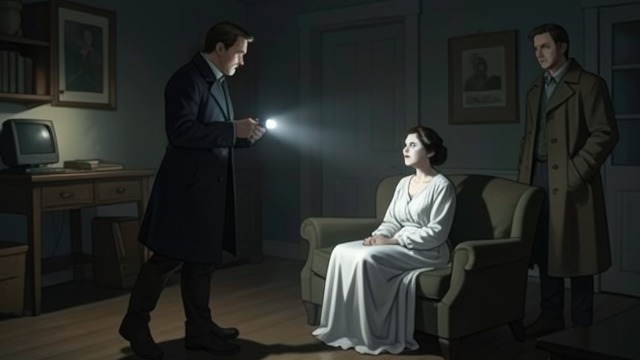
When Visalia investigators compared the Ransacker with the East Area Rapist, they found striking similarities: both targeted personal belongings, entered homes at night, and appeared to study their surroundings. The overlap invited a theory that the same offender had changed from prowling and burglary to sexual assault.
Contradictions Resist Closure
Sacramento investigators also saw significant differences in physical descriptions, shoe evidence, and behavior. The two departments publicly disagreed, and the proposed connection remained unsettled rather than becoming a shared investigative conclusion.
The dispute shows how evidence can point in several directions at once. Similar methods may indicate one offender, imitation, or coincidence; differences may be decisive or reflect imperfect descriptions. The book preserves the disagreement because uncertainty is itself part of the case history.
A Clue on the Tracks
A Clue on the Tracks
A Bag in Property
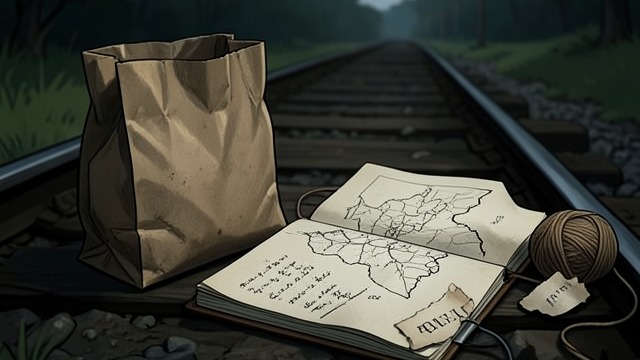
While looking for a ski cap, Paul Holes noticed a stored bag labeled as having been collected from a railroad right-of-way after an attack in Danville. Inside were notebook pages, a hand-drawn map, a length of yarn, and a fragment of typed paper—items whose relationship to the offender was not immediately clear.
Interpretation Begins
One page complained about a sixth-grade teacher; the map looked like a designed plan of a neighborhood. On its reverse, the word punishment stood out among less legible marks. Holes sought opinions from people familiar with development and landscape design, but no single interpretation could establish who wrote the pages or why they were there.
The discovery invigorated the investigation while introducing fresh risks of overreading. The papers might belong to the offender, but their meaning depended on context the case file did not preserve. Their value lay in generating testable questions, not in functioning as a confession or a name.
The Suspect Who Fit
The Suspect Who Fit
A Pattern of Circumstances
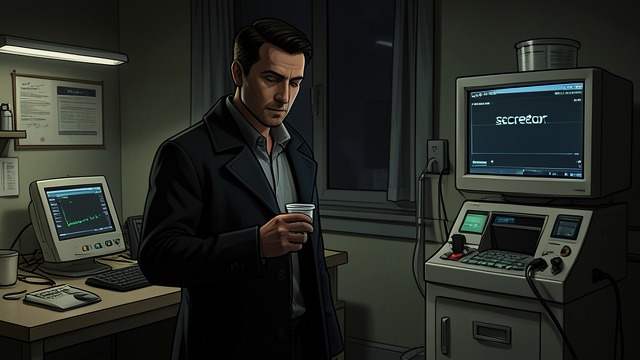
Investigators examined Jim Walther after a late-night stop placed him near an area where the East Area Rapist had attacked. His address, prior contact with Sacramento, height, shoe size, and resistance to providing a sample appeared to fit parts of the known profile.
A Test Changes the Picture
The task force eventually obtained a saliva sample, and testing classified Walther as a secretor while the offender was understood to be a nonsecretor. That result led investigators to drop him as a suspect. Decades later, Paul Holes questioned the reliability of the old testing method, reopening the question without proving Walther was the offender.
The episode demonstrates why a collection of suggestive details is not equivalent to identification. Investigators may be drawn toward a person who seems to explain many clues, yet one scientific result can alter the theory—and later knowledge can expose limitations in that result. The case requires both skepticism and restraint.
The Candidate Who Vanished
The Candidate Who Vanished
A Convincing Profile
Michelle McNamara repeatedly encountered people whose biographies seemed to align with portions of the offender’s history. One apparent candidate matched aspects of the geography and physical profile, while another seemed to fit an animal tattoo described by a witness and a violent family history.
DNA Overrides Narrative
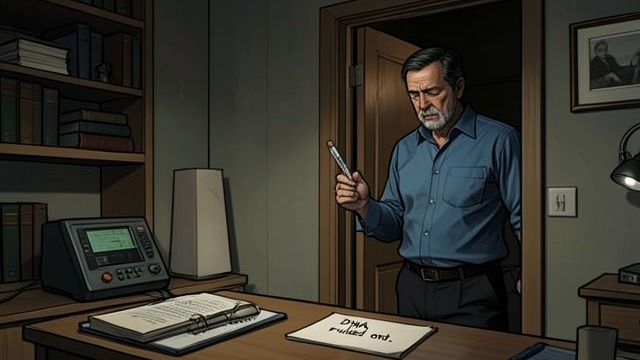
Each lead generated the same obligation: investigators had to eliminate the person through evidence. In one instance, Larry Pool told Michelle that DNA had already ruled out the man she had researched. The promising story collapsed, illustrating how easily unrelated details can be assembled into a persuasive but false portrait.
The failures were not merely setbacks; they exposed confirmation bias as a persistent danger in a case with so many fragments. A good suspect narrative can feel like recognition, but a narrative is not proof. Michelle’s reporting repeatedly returns to the discipline of accepting an exclusion, even when it dismantles an exciting theory.
The Case File’s Blind Spots

The Case File’s Blind Spots
A Larger Archive
In 2016, Michelle McNamara and Paul Holes gained access to a large collection of Orange County case files. They scanned and indexed material that had not been readily available to investigators, hoping overlooked reports might contain a forgotten witness, a vehicle, or a name.
No Guaranteed Revelation
Michelle estimated that the offender’s identity might be somewhere in the archive, but the files also contained dead ends, incomplete notes, and details whose significance had disappeared with the people who recorded them. Her final working questions ranged across several cases, reflecting a search still in progress rather than a discovery already secured.
The archive enlarged what could be examined without removing uncertainty. More documents meant more opportunities to find a clue, but also more circumstances to connect incorrectly. The book’s treatment of the files makes the method visible: preserve the fragment, test its context, and do not confuse volume with certainty.
1977–1978
March 31, 2011
1979–1980
2012–2014
January 2016–April 2016
